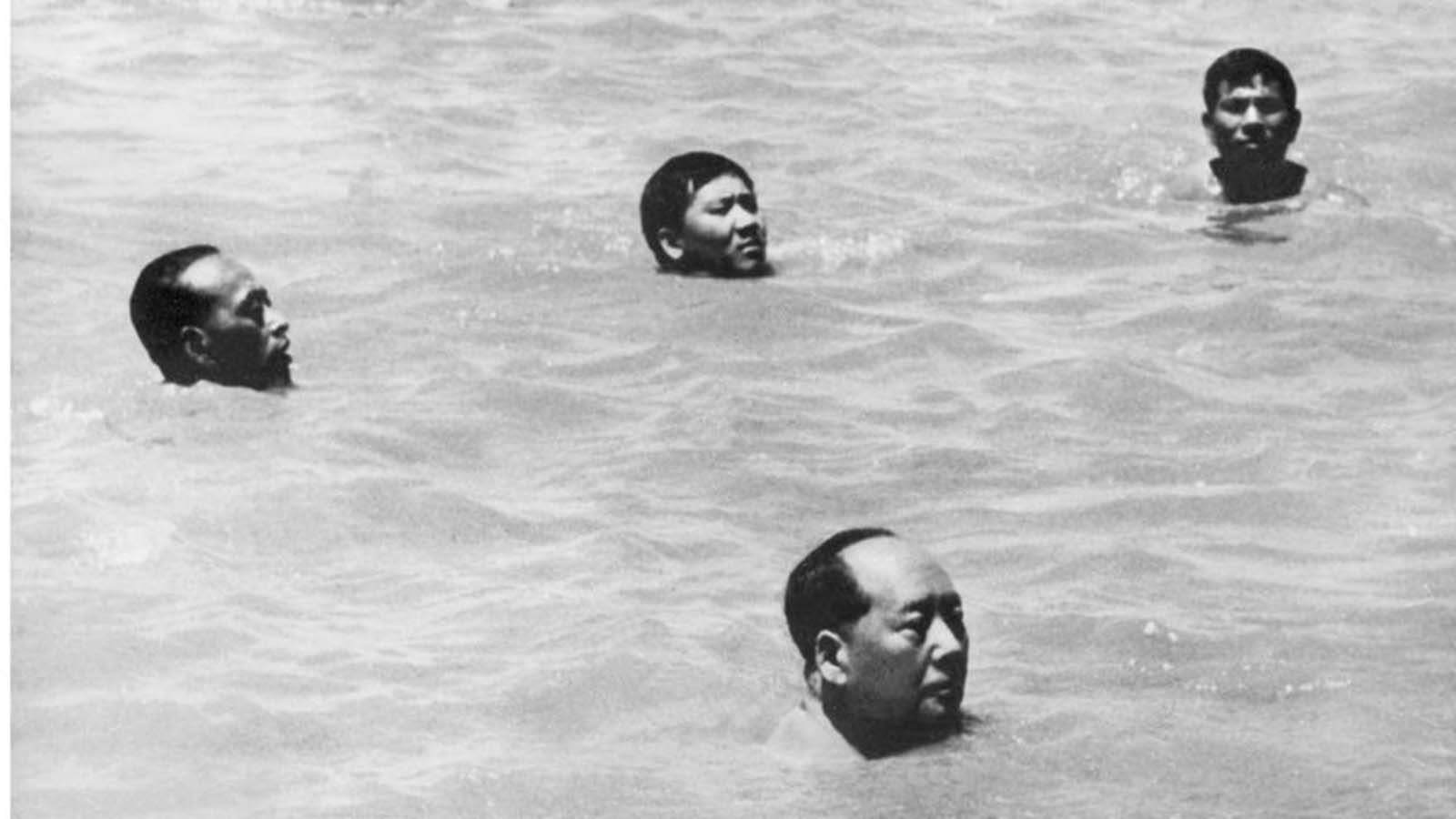
On July 16, 1966, Mao Zedong, then 72 years old, took a widely publicized swim in the Yangtze River near Wuhan. State media reported he swam for about 65 minutes, covering roughly 15 kilometers, aided significantly by the river’s strong current. The event was heavily photographed and filmed, and images of Mao in the water — surrounded by supporters and swimmers — were distributed across China.
Mao had been sidelined somewhat from day-to-day government affairs in the early 1960s after the catastrophic failure of the Great Leap Forward, with more moderate leaders like Liu Shaoqi and Deng Xiaoping managing recovery efforts. The swim was staged and publicized just days before Mao returned to Beijing to launch the Cultural Revolution.
The imagery presented Mao as vigorous, healthy, and very much still in command — countering any perception that he was old, frail, or politically weakened. It was a visual assertion of vitality and authority, signaling to the party and the public that he was ready to reassert control.
Within weeks of the swim, Mao launched the Cultural Revolution, a massive and violent political upheaval that would convulse China for the next decade, involving purges, the mobilization of the Red Guards, and widespread social and political chaos. The swim is often viewed by historians as the symbolic opening act of that campaign — a carefully choreographed piece of political theater meant to reintroduce Mao as an active, commanding leader before he moved to reshape the party in his favor.
An annual “swim the Yangtze” event is still held in China each July, commemorating the occasion.