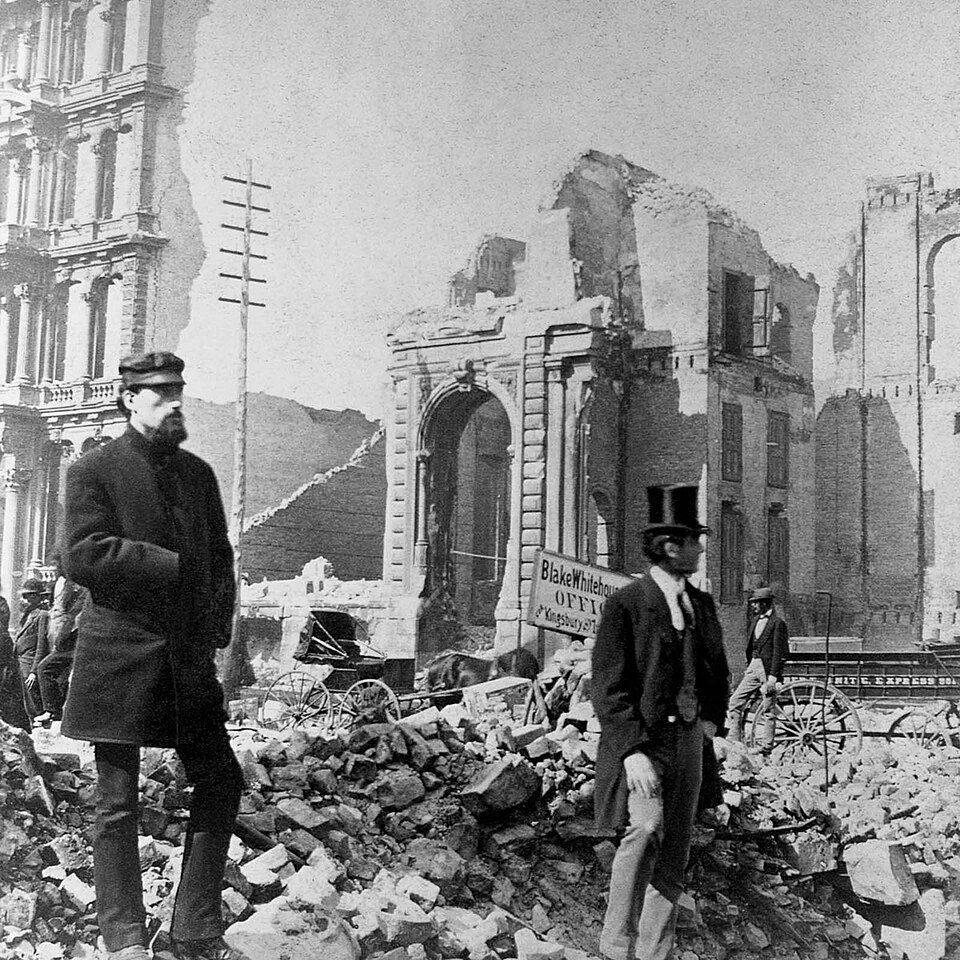
The fire burned for two days, ending on October 10, 1871, and ranks as one of the most famous and destructive disasters in American history.
Chicago had experienced a severe, months-long drought, leaving the entire city bone-dry. The entire city—including houses, sidewalks, and even streets—was constructed out of wood.
Strong, sweeping winds from the southwest carried embers across the Chicago River, igniting new sections of the city and making the fire completely uncontrollable.
Photographers rushed to the scene as the embers cooled, using heavy glass-plate cameras to document a landscape that resembled a war zone. The fire destroyed an area roughly 4 miles long and 1 mile wide, consuming over 17,500 buildings, leaving 100,000 residents homeless (one-third of the city’s population), and killing an estimated 300 people.
The tragedy had a profound impact on the future of American architecture and urban planning. Because the city had to be rebuilt from scratch, Chicago became a blank canvas for a new generation of architects. This led directly to:
-
The Chicago School of Architecture: Architects pioneered the use of fireproof steel frames and large plate glass.
-
The First Skyscrapers: The necessity for safe, dense construction in the aftermath of the fire directly birthed the modern skyscraper.
-
Strict Building Codes: The disaster forced cities across the world to ban wooden structures in downtown cores and implement rigorous fire safety regulations.