“Gorilla in the Congo” is a photograph by South African photojournalist Brent Stirton, taken in 2007 in Virunga National Park, Democratic Republic of Congo. It’s included in TIME’s list of the 100 most influential photographs ever taken.
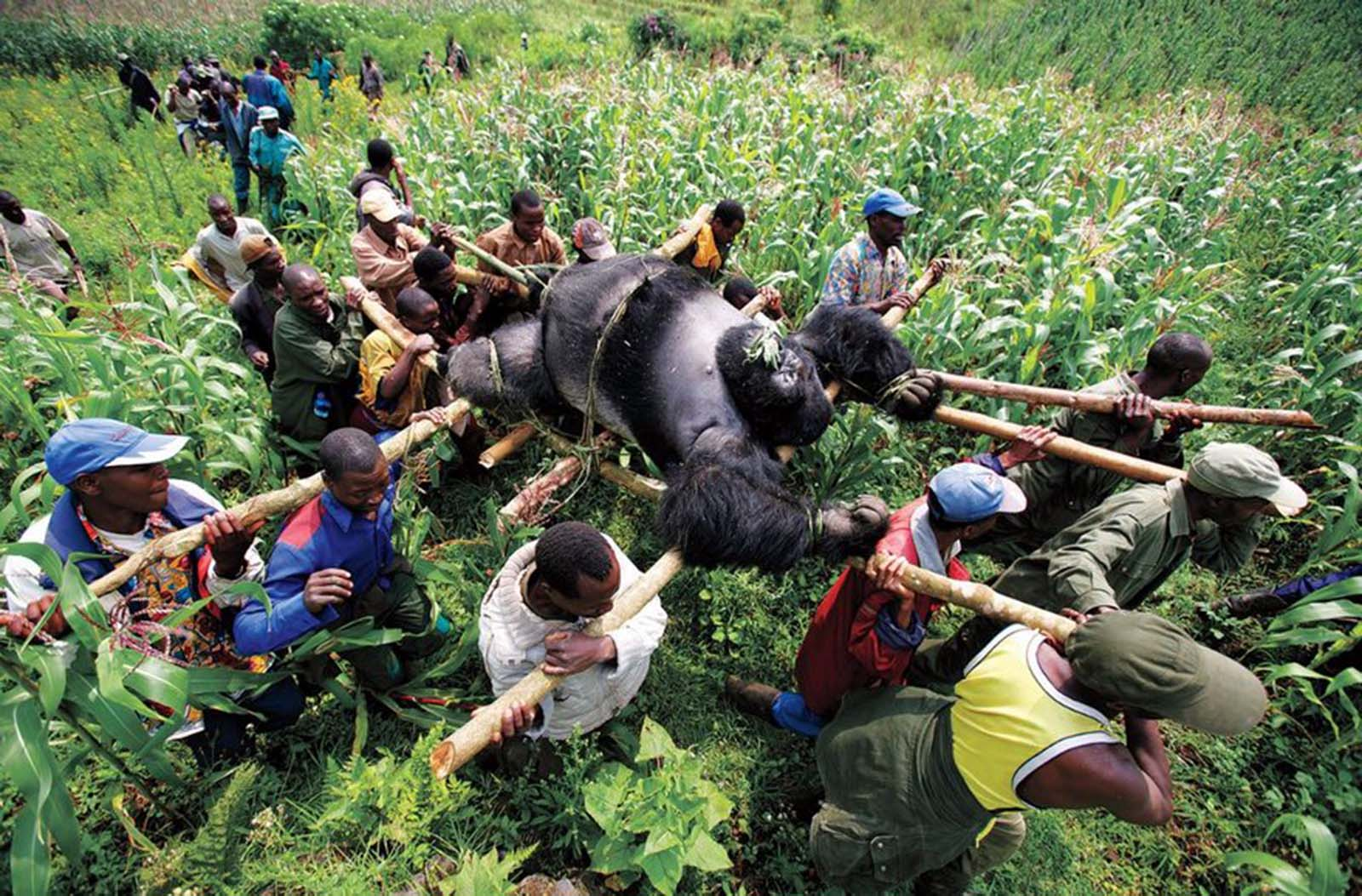
It shows a silverback mountain gorilla named Senkwekwe, weighing at least 500 pounds, strapped to a makeshift stretcher and carried by more than a dozen men through the forest. The image is striking partly because, as Stirton captured it, the gorilla looks huge but vaguely human, lending the scene an unsettling, almost funereal quality — like the transport of a fallen human figure rather than an animal.
Senkwekwe and several other gorillas were shot dead as a violent conflict engulfed Virunga, home to half the world’s critically endangered mountain gorillas. At the time, the park was under siege from people illegally harvesting wood for a charcoal industry that had grown in the wake of the Rwandan genocide. Investigators believed the killings — a silverback alpha male and three females were shot in one incident — were likely connected to this illegal charcoal trade, possibly as intimidation against park rangers trying to stop it, since the deaths didn’t appear to be for meat or trophies.
The photo underscored that conflict in Central Africa affects more than the humans caught in the crossfire — it also touches the region’s environment and animal inhabitants. It had real-world impact too: three months after the photograph was published in Newsweek, nine African countries, including Congo, signed a legally binding treaty to help protect the mountain gorillas of Virunga.
One of the orphaned gorillas from this same wave of killings, an infant named Ndakasi, was found clinging to the lifeless body of her mother, who had been shot by armed militia, and was raised by ranger André Bauma. She later became internet-famous for a 2019 “gorilla selfie,” and her death in 2021 — captured in another widely shared photo, “Ndakasi’s Passing,” also by Stirton — closed a kind of narrative loop back to this same 2007 crisis in Virunga.