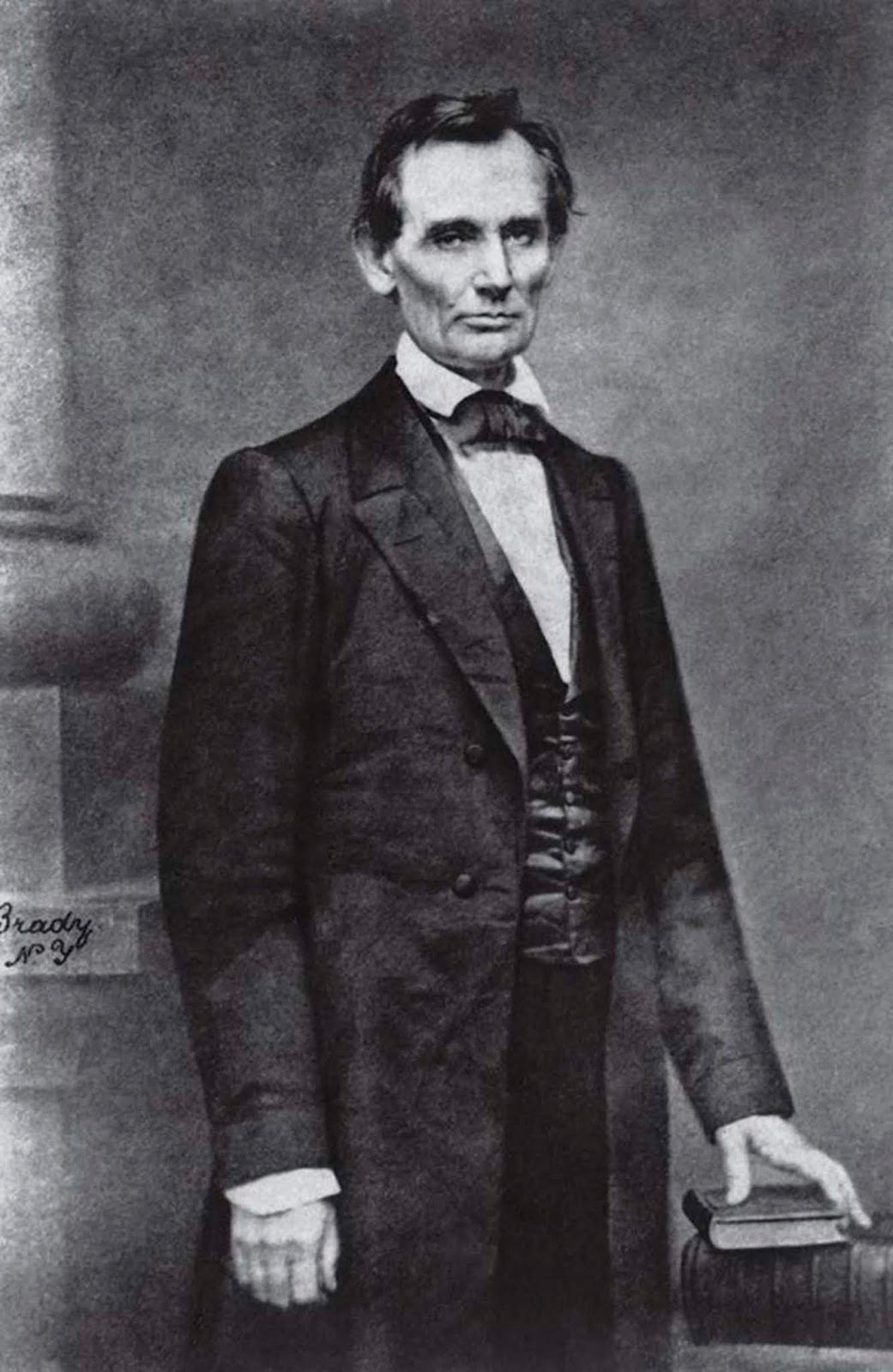
Abraham Lincoln was the 16th President of the United States, serving from 1861 to 1865.
Lincoln was born in 1809 in Kentucky, and grew up in poverty on the frontier.
He had was almost entirely self-taught — reading voraciously by firelight, borrowing books, and teaching himself law. He worked as a farm laborer, rail-splitter, store clerk, postmaster, and surveyor before becoming a lawyer and eventually a state legislator in Illinois.
He’s widely regarded as one of the most consequential figures in American history, largely because he led the country through its greatest internal crisis: the Civil War.
He served one term in the U.S. House of Representatives in the 1840s, then largely returned to law until the slavery debate pulled him back into politics in the 1850s. His 1858 Senate campaign against Stephen Douglas — the famous Lincoln-Douglas debates — made him a national figure, even though he lost that race. He won the presidency in 1860 as the Republican candidate, running on a platform opposed to the expansion of slavery into new territories.
His election triggered the secession of Southern states, and the Civil War began just weeks after he took office. Lincoln proved to be a shrewd wartime leader — he assembled a famously talented and fractious cabinet (sometimes called a “team of rivals”), went through several generals before finding effective ones like Ulysses S. Grant, and held the Union together through four brutal years of war.
In 1863, he issued the Emancipation Proclamation, declaring enslaved people in Confederate-held territory free — a major turning point that reframed the war as a fight against slavery itself. He also delivered the Gettysburg Address, one of the most quoted speeches in American history, at just over two minutes long. He pushed for the 13th Amendment, which formally abolished slavery, and it passed Congress in early 1865.
Just days after Confederate General Robert E. Lee’s surrender effectively ended the war, Lincoln was shot by John Wilkes Booth at Ford’s Theatre in Washington, D.C., on April 14, 1865, and died the next morning.